
 Imtiaj Hossain
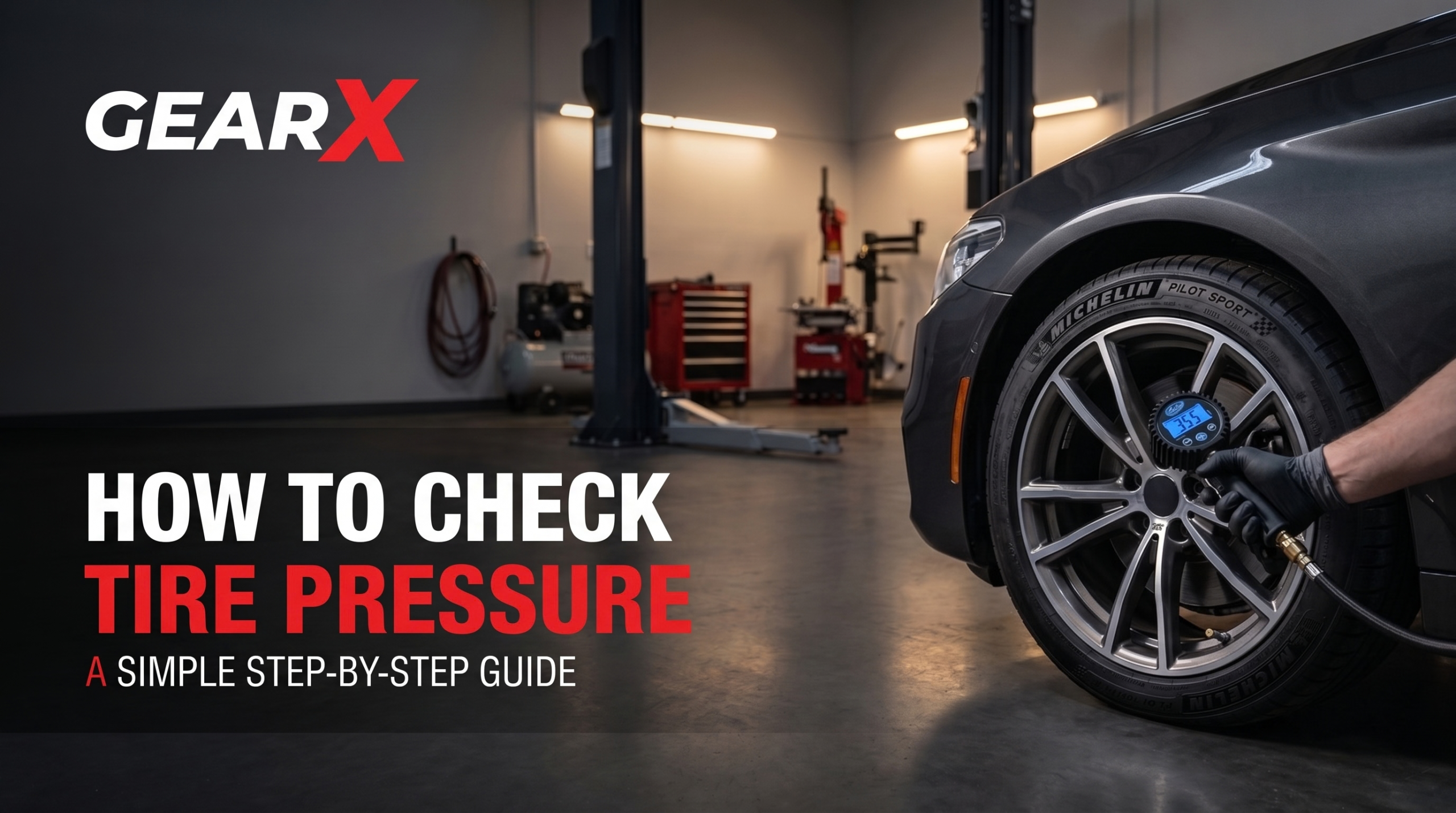
Your tires are one of the few parts of your car that constantly stay in contact with the road, so keeping them at the correct pressure is an important part of safe driving. Incorrect tire pressure can affect handling, tire wear, fuel economy, and overall tire life. (NHTSA)
The good news is that checking tire pressure is simple and usually takes only a few minutes. You don’t need special mechanical skills—just a reliable tire-pressure gauge and access to an air pump.
Here’s how to check your tire pressure correctly and what to do if the pressure is too high or too low.
Why Is Tire Pressure Important?
Tire pressure affects much more than just how your tires look.
Underinflated tires can increase tire wear, affect handling, and contribute to tire overheating. Overinflated tires can also affect handling and the way the tire contacts the road. Keeping the tires at the vehicle manufacturer’s recommended pressure helps maintain proper performance and tire life. (NHTSA)
NHTSA recommends checking tire pressure at least once a month, as well as before long trips. (NHTSA)
What Tire Pressure Should Your Car Have?
Don’t guess the correct PSI based on the number printed on the tire sidewall.
The recommended tire pressure for your vehicle is normally found on:
- The sticker on the driver’s door or doorjamb
- The vehicle owner’s manual
- The manufacturer’s recommended tire information
The number molded into the tire sidewall generally indicates the tire’s maximum allowable pressure, not the recommended pressure for your particular vehicle. (NHTSA)
Your vehicle may also specify different pressures for the front and rear tires, so check the manufacturer’s label carefully.
What Do You Need to Check Tire Pressure?
You only need a few basic things:
- A reliable tire pressure gauge
- An air compressor or tire inflator if the pressure needs adjustment
- Your vehicle’s recommended PSI
- A few minutes of your time
A digital gauge can make the reading easier to see, but a traditional pencil-style gauge can also work well when used correctly. (Michelin)
How to Check Tire Pressure Step by Step
Step 1: Check the Tires When They’re Cold
For the most accurate reading, check the tires when they are cold.
NHTSA defines a cold tire as one that has not been driven for at least three hours. (NHTSA)
Driving heats the tires and can temporarily increase the pressure, which means checking them immediately after a drive may not give you a useful comparison with the vehicle manufacturer’s recommended cold pressure.
Step 2: Find the Recommended PSI
Before measuring anything, find the recommended tire pressure on your driver’s-door label or in the owner’s manual.
For example, your vehicle might specify different pressures for the front and rear tires. Use the numbers specifically provided for your vehicle.
Step 3: Remove the Valve Cap
Unscrew the small valve cap from the tire’s valve stem and keep it somewhere safe.
You should see a small metal valve where the pressure gauge will connect.
Step 4: Press the Gauge Onto the Valve
Firmly press the tire-pressure gauge onto the valve stem.
You should get a pressure reading. If you hear a brief hiss while attaching the gauge, that’s usually just a small amount of air escaping during the measurement. (Michelin)
Make sure the gauge is seated properly so you get an accurate reading.
Step 5: Compare the Reading With the Recommended PSI
Now compare the number on the gauge with the recommended pressure.
For example:
Recommended: 35 PSI
Measured: 30 PSI
The tire is 5 PSI below the recommended cold pressure.
Check all four tires because one tire may have lost more pressure than the others.
Don’t forget to check the spare tire if your vehicle is equipped with one. (NHTSA)
Step 6: Add Air if the Pressure Is Too Low
If a tire is below the recommended pressure, add air gradually using an appropriate inflator.
After adding air, check the pressure again with your gauge.
Continue until it reaches the vehicle manufacturer’s recommended cold pressure.
Step 7: Release Air if the Pressure Is Too High
If the tire has more pressure than recommended, release air gradually and recheck it with the gauge.
Don’t remove a large amount of air at once. Make small adjustments until the reading matches the recommended pressure.
Step 8: Replace the Valve Caps
Once all the tires are at the correct pressure, securely replace the valve caps.
Then take one final reading if necessary to make sure everything is correct.
How to Know If Your Tire Pressure Is Too Low
Some signs can indicate low tire pressure, although you shouldn’t rely on appearance alone.
You may notice:
- The tire looks visibly softer
- The car feels different while driving
- Steering feels heavier than usual
- The vehicle’s TPMS warning light comes on
- One tire repeatedly loses pressure
However, a tire can be significantly underinflated without looking obviously flat. That’s why using a pressure gauge is more reliable than simply looking at the tire. (NHTSA)
What Does the Tire Pressure Warning Light Mean?
If your TPMS (Tire Pressure Monitoring System) warning light comes on, it generally means that at least one tire is significantly underinflated.
You should check your tire pressures as soon as it is safe to do so. (NHTSA)
If the warning light flashes and then stays illuminated, the vehicle may be indicating a TPMS system malfunction rather than simply low tire pressure. In that situation, consult your owner’s manual or have the system inspected. (NHTSA)
Remember, TPMS is a useful warning system, but it doesn’t replace regular manual tire-pressure checks. (NHTSA)
Can Temperature Change Tire Pressure?
Yes.
Tire pressure changes with temperature. When the outside temperature drops, tire pressure can also decrease. That’s one reason you may see a TPMS warning on a particularly cold morning even if the tire doesn’t have an obvious puncture. (NHTSA)
The important thing is to adjust the tire to the manufacturer’s recommended cold pressure, rather than intentionally leaving it underinflated because the weather is cold.
What If One Tire Keeps Losing Air?
If you’ve correctly inflated a tire but it repeatedly becomes low, don’t simply keep adding air.
A slow leak could be caused by:
- A nail or other puncture
- Damage to the tire
- A leaking valve
- A problem where the tire seals against the wheel
Have the tire inspected by a qualified tire professional to find the cause.
A tire that loses pressure repeatedly deserves attention, even if the leak is slow.
How Often Should You Check Tire Pressure?
For routine maintenance, check your tire pressure at least once a month and before long road trips. (NHTSA)
It’s also a good idea to check the pressure when:
- The TPMS warning light comes on
- Your car has been sitting for an extended period
- You’ve hit a significant pothole or curb
- One tire looks different from the others
- You’re preparing for a long highway trip
Checking when the tires are cold will give you the most useful reading.
Tire Pressure vs. Tire Pressure Monitoring System
These two things are related but not the same.
Tire pressure is the actual amount of air inside the tire, usually measured in PSI or kPa.
TPMS is the vehicle’s monitoring system that detects low tire pressure and warns the driver.
Your car may have TPMS, but you should still manually check the pressure regularly because the warning system is not intended to replace routine tire maintenance. (NHTSA)
Quick Tire Pressure Checklist
Before a long trip, take a few minutes to check:
- ✅ Recommended PSI from the vehicle manufacturer
- ✅ All four tires
- ✅ Spare tire, if equipped
- ✅ Tire pressure when cold
- ✅ Visible cuts, cracks, bulges, or punctures
- ✅ Uneven tread wear
- ✅ TPMS warning light
If you find visible tire damage or a tire that repeatedly loses pressure, have it inspected by a tire professional rather than continuing to drive on it. (NHTSA)
The Bottom Line
Learning how to check tire pressure is one of the simplest maintenance tasks you can do for your car.
Use a reliable gauge, check the tires when they’re cold, and always follow the vehicle manufacturer’s recommended pressure rather than the maximum pressure printed on the tire sidewall. Check all four tires regularly, and don’t ignore a tire that repeatedly loses air or a TPMS warning that doesn’t go away.
A few minutes of checking each month can help you catch tire-pressure problems before they become bigger issues. (NHTSA)
Important Note
Tire-pressure recommendations vary by vehicle, tire size, load, and manufacturer. Always use the pressure listed on your vehicle’s tire-information label or in the owner’s manual. If a tire is damaged, repeatedly loses pressure, or shows unusual wear, have it inspected by a qualified tire professional.