
 Imtiaj Hossain
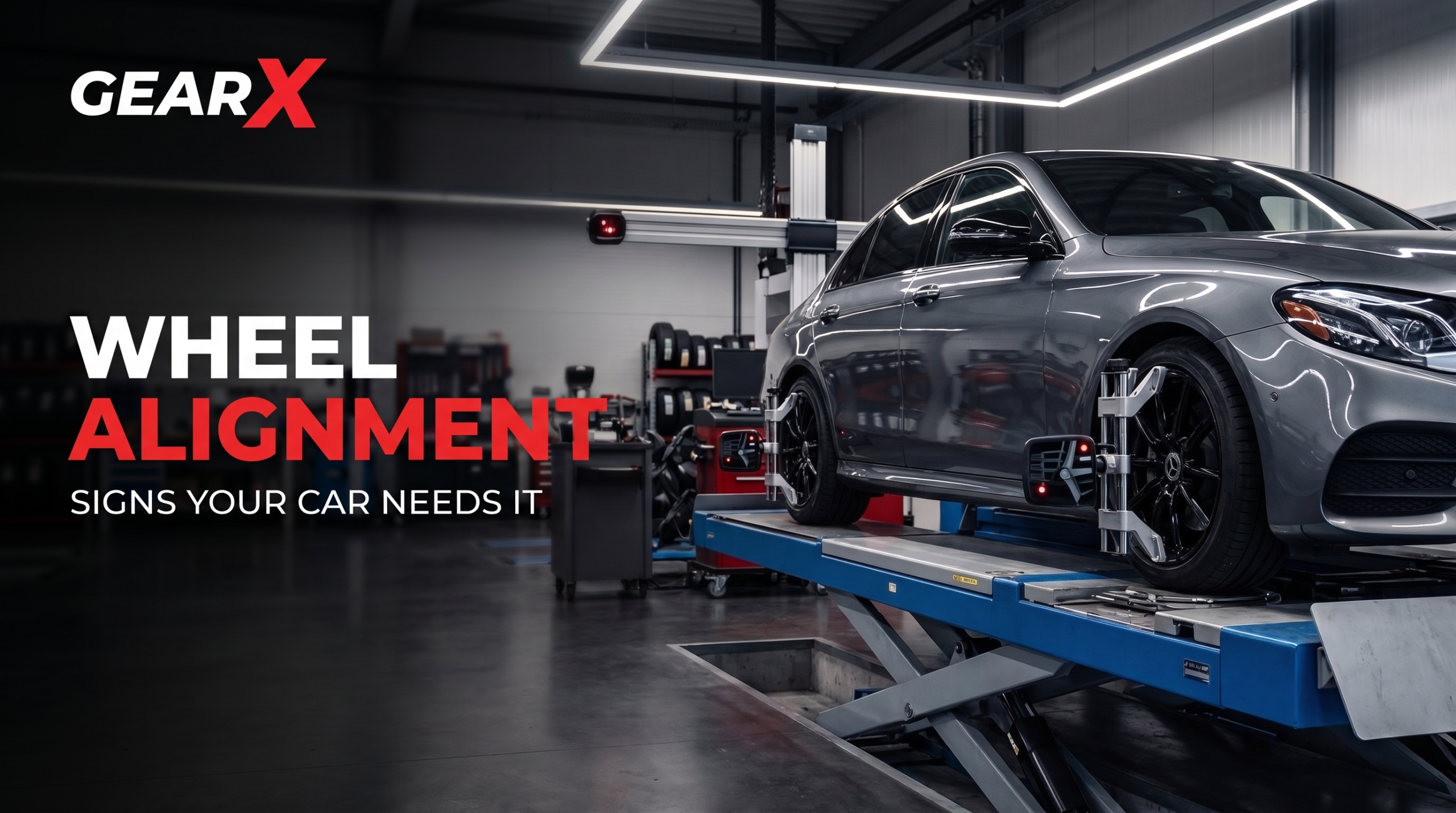
If your car pulls to one side, the steering wheel looks slightly crooked while driving straight, or your tires are wearing unevenly, the problem may be related to wheel alignment.
Wheel alignment is an important part of vehicle maintenance because it affects how your tires contact the road, how the car handles, and how evenly your tires wear. Even a small alignment problem can gradually cause uneven tire wear and make the vehicle feel less stable. (Michelin)
The good news is that alignment problems are often easy to notice if you know what to look for. Here’s what wheel alignment does, how to recognize a problem, and when your car should be checked.
What Is Wheel Alignment?
Wheel alignment is the process of adjusting the angles of your vehicle’s wheels so they match the manufacturer’s specifications.
Despite the name, technicians don’t simply “straighten the wheels.” They measure and adjust the geometry of the steering and suspension system so the tires point and contact the road correctly.
The three main alignment angles are:
- Camber: The inward or outward tilt of the wheel when viewed from the front.
- Caster: The angle of the steering axis when viewed from the side.
- Toe: The direction the tires point relative to each other when viewed from above.
These settings work together to help the vehicle drive straight, handle predictably, and maintain more even tire wear. (Michelin)
Why Does Wheel Alignment Matter?
When your alignment is correct, the tires can maintain more consistent contact with the road.
A proper alignment can help:
- Reduce uneven or premature tire wear
- Keep the vehicle tracking more consistently
- Improve steering response
- Maintain predictable handling
- Help your tires last longer
When alignment is significantly off, the tires can scrub against the road instead of rolling cleanly, which can accelerate tread wear. (Michelin)
6 Signs Your Car May Need a Wheel Alignment
You don’t necessarily need special equipment to notice the early signs of an alignment problem. Pay attention to how your car behaves while driving.
1. Your Car Pulls to One Side
If your car consistently drifts or pulls left or right on a reasonably flat, straight road, alignment could be one possible cause.
However, tire pressure and tire condition can also affect how a car tracks, so pulling does not automatically mean the alignment is bad. (Michelin)
2. Your Steering Wheel Isn’t Straight
If you’re driving straight but your steering wheel sits noticeably at an angle, your vehicle may need an alignment check.
This is one of the more common signs drivers notice after hitting a pothole or curb. (Michelin)
3. Your Tires Are Wearing Unevenly
Look at the tread across your tires.
If one side of the tread is wearing noticeably faster than the other, misalignment could be responsible. One-sided or unusual tread wear can also have other causes, so a professional inspection is useful before replacing parts or tires. (Michelin)
4. The Car Feels Unstable or Wanders
If you constantly need to make small steering corrections to keep the car going straight, don’t ignore it.
Alignment is one possible cause, although worn steering or suspension components can create similar symptoms. (Michelin)
5. Your Steering Feels Different
A change in steering response—such as the car feeling less precise or responding differently than usual—can be a reason to have the alignment and related components inspected. (Michelin)
6. You Recently Hit a Pothole or Curb
A hard impact doesn’t always cause visible damage.
Hitting a large pothole, curb, road debris, or being involved in a collision can affect wheel alignment or damage steering and suspension components. An alignment check after a significant impact can help identify problems early. (Michelin)
How Can You Check Your Wheel Alignment?
You can look for signs of a possible alignment problem at home, but you generally cannot accurately measure or correct the alignment yourself without the proper equipment.
Start with these simple checks:
Check 1: Look at the Steering Wheel
On a safe, straight section of road, notice whether the steering wheel stays centered when the vehicle is traveling straight.
If the car is moving straight but the steering wheel remains noticeably crooked, an alignment check may be appropriate.
Check 2: Look at the Tires
Inspect the tread on all four tires.
Look for:
- One edge wearing faster than the other
- Feathered or sawtooth-like tread edges
- Noticeably different wear between tires
These patterns can indicate alignment or other tire/suspension issues. (Michelin)
Check 3: Check Tire Pressure First
Before assuming you need an alignment, check that all tires are inflated according to the vehicle manufacturer’s recommended pressure.
Incorrect tire pressure can also affect handling and tire wear, so it should be ruled out first.
Check 4: Get a Professional Alignment Check
A proper alignment requires measuring the vehicle’s alignment angles and comparing them with the manufacturer’s specifications.
If the measurements are outside the required range, a technician can determine which adjustments or repairs are needed. (Firestone Complete Auto Care)
When Should You Get a Wheel Alignment?
There isn’t one universal mileage interval that applies to every vehicle.
You should consider an alignment check when:
- Your car starts pulling to one side
- The steering wheel becomes off-center
- You notice unusual tire wear
- You’ve hit a significant pothole or curb
- Your vehicle has been involved in an accident
- Steering or suspension components have been replaced
- Your vehicle’s handling suddenly changes
Some tire and service companies recommend periodic checks, but your vehicle manufacturer’s maintenance recommendations should take priority. (Michelin)
Do You Need an Alignment After Getting New Tires?
Not automatically.
Installing new tires does not itself mean the vehicle’s alignment is incorrect. However, checking the alignment when installing new tires can be useful, particularly if the old tires showed uneven wear or the vehicle has developed handling problems.
There’s little benefit in putting expensive new tires on a vehicle that is already wearing tires unevenly because of an unresolved alignment or suspension problem. (Firestone Complete Auto Care)
Wheel Alignment vs. Wheel Balancing
These two services are often confused, but they solve different problems.
| Wheel Alignment | Wheel Balancing |
|---|---|
| Corrects wheel/tire angles | Corrects weight distribution |
| Mainly affects tracking and tire wear | Mainly affects vibration |
| Can cause pulling and uneven wear | Can cause vibration at certain speeds |
| Adjusts suspension/steering geometry | Uses balancing weights on the wheel |
In simple terms:
Alignment controls where the tire points.
Balancing controls how smoothly the wheel and tire rotate. (Michelin)
How Long Does a Wheel Alignment Take?
The actual alignment service can often be completed in around an hour, but the time depends on the vehicle and whether the technician finds worn or damaged steering or suspension components that need attention first. (Firestone Complete Auto Care)
If components such as tie rods, control arms, or other suspension parts are damaged, simply adjusting the alignment may not solve the underlying problem. Those issues may need to be repaired before the alignment can be set correctly. (Firestone Complete Auto Care)
The Bottom Line
Wheel alignment isn’t something you usually need to think about every time you drive, but changes in steering, handling, or tire wear are worth paying attention to.
If your car pulls to one side, the steering wheel isn’t centered, or your tires are wearing unevenly, start with simple checks such as tire pressure and tire condition. If the problem continues—or if you’ve recently hit a pothole or curb—have the alignment and steering/suspension components professionally inspected.
Catching an alignment problem early can help prevent unnecessary tire wear and keep your car handling the way it was designed to. (Michelin)
Important Note
Wheel alignment specifications and maintenance intervals vary by vehicle. Always check your owner’s manual or manufacturer’s service information for the recommended specifications. Alignment symptoms can also be caused by tire-pressure problems, worn tires, or damaged steering and suspension components, so a professional inspection may be necessary to identify the actual cause.