
 Imtiaj Hossain
Gasoline cars are no longer the only obvious choice for drivers. Electric vehicles and hybrids have become more capable, more widely available, and more competitive than ever.
But that does not mean gasoline cars have suddenly become a bad choice.
In 2026, the right option still depends on how you drive, where you live, your budget, access to charging, and how long you plan to keep the vehicle.
Electric cars are expected to account for around 29% of global new-car sales in 2026, according to the International Energy Agency (IEA). At the same time, gasoline-powered vehicles remain widely available, and many buyers still value their familiar refueling system and long-distance convenience. (IEA)
So, are gasoline cars still worth buying in 2026?
For many drivers, yes—but not for everyone.
Gasoline Cars Still Have Some Major Advantages
The biggest advantage of a gasoline car is convenience.
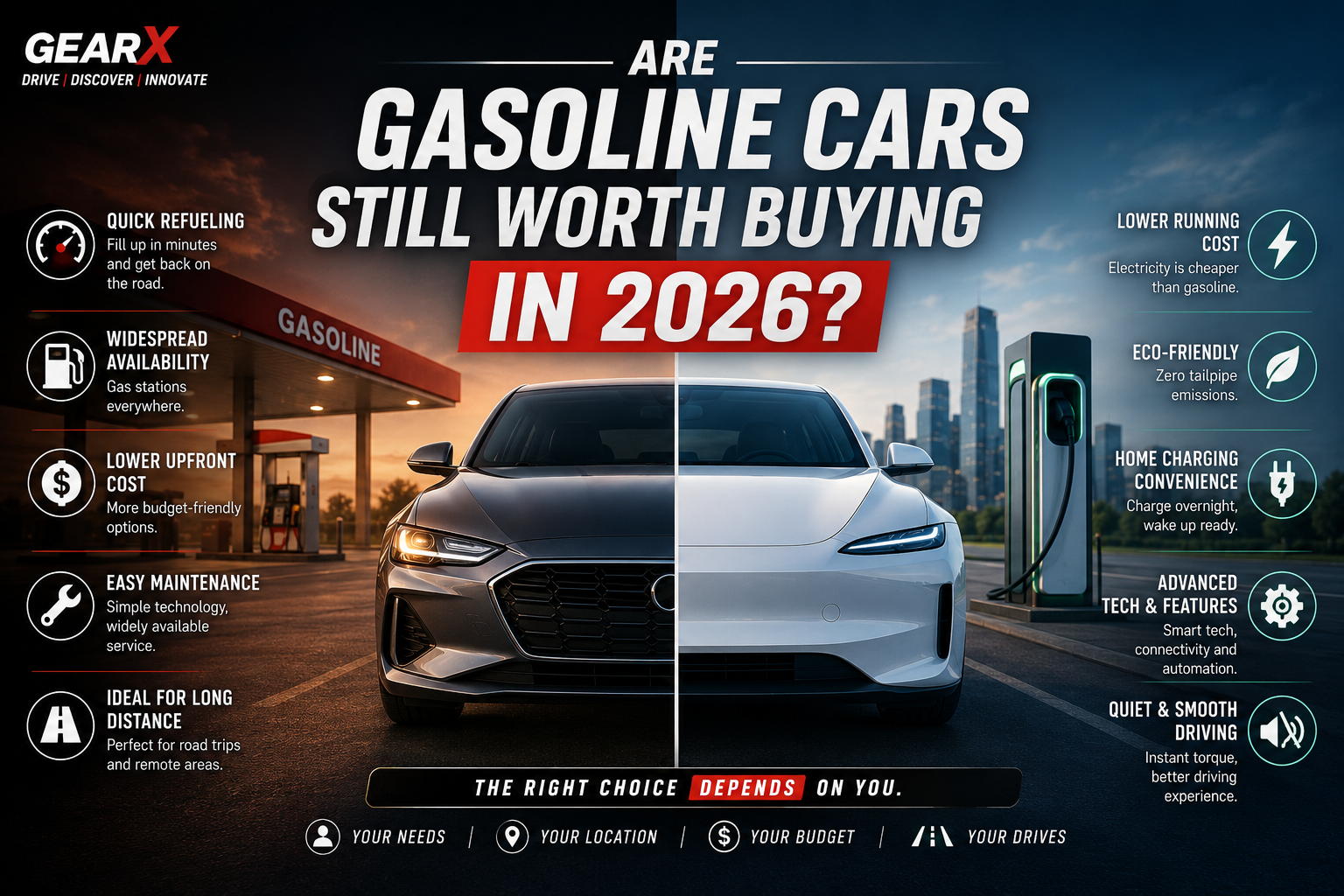
Gas stations are already widespread in most countries, and refueling usually takes only a few minutes. Drivers do not need to plan their journeys around charging stations in the same way some EV owners may need to.
This can be particularly useful for people who regularly drive long distances or live in areas where public EV charging infrastructure is limited.
Gasoline vehicles also come in a wide range of sizes and prices. Buyers can choose from small hatchbacks, sedans, SUVs, sports cars, pickup trucks, and other vehicle types.
That variety remains an important reason why gasoline cars continue to have a place in the market.
What About Fuel Costs?
Fuel costs are one of the biggest disadvantages of gasoline vehicles.
A gasoline engine converts only part of the fuel’s energy into motion, while electric motors are considerably more efficient.
The IEA says EVs generally have lower running costs than internal-combustion vehicles because of their higher efficiency. The agency also notes that recent oil-price increases have made the potential fuel-cost savings of EVs more significant in several markets. (IEA)
However, the actual difference depends heavily on local electricity and gasoline prices.
A driver who travels only a few thousand kilometres each year may not save enough on energy costs to justify paying considerably more for an EV.
On the other hand, someone who drives long distances every day could see a much larger difference.
Gasoline Cars Are Still Easier to Refuel
Charging technology is improving quickly, but gasoline still has one major advantage: speed and availability.
A gasoline vehicle can normally be refueled within minutes.
EV charging can take considerably longer, although newer high-voltage vehicles and ultra-fast chargers are reducing charging times.
The IEA reports that faster charging technology is developing rapidly, with new high-voltage EV platforms and charging systems allowing much shorter charging stops. (IEA)
Still, charging convenience depends on where you live.
Someone with a home charger may find an EV extremely convenient because the vehicle can charge overnight.
Someone living in an apartment without dedicated parking or charging access may find gasoline or hybrid vehicles much easier to live with.
Maintenance Is Different
Gasoline vehicles have many mechanical components that EVs do not.
A gasoline engine requires systems such as:
- Engine oil
- Oil filters
- Spark plugs
- Air filters
- Fuel systems
- Exhaust components
- Cooling systems
- Transmission components
These parts can require regular maintenance.
EVs have fewer moving drivetrain components and do not require conventional engine-oil changes.
That does not mean an EV has no maintenance.
Electric vehicles still require tires, brakes, suspension components, cabin filters, cooling systems, and other inspections.
Battery health is also an important consideration for long-term EV ownership.
Gasoline Cars Offer Familiar Driving
For many drivers, gasoline cars still provide a familiar experience.
Starting the engine, filling the tank, changing gears, and hearing the engine are all parts of traditional car ownership.
Some drivers also prefer the characteristics of gasoline engines, particularly in performance vehicles.
Turbocharged gasoline engines can deliver strong acceleration while maintaining relatively small engine sizes.
Hybrid technology is also allowing manufacturers to combine gasoline engines with electric motors to improve efficiency without completely moving away from combustion engines.
The IEA notes that hybrid model availability continues to expand globally, with more than 200 hybrid models available worldwide in 2025. (IEA)
What About Long-Distance Driving?
This is one area where gasoline cars remain highly practical.
If you regularly travel hundreds of kilometres between cities, a gasoline vehicle can be convenient because refueling infrastructure is already well established.
EVs are becoming much better at long-distance travel, and charging networks continue to expand.
The average range of battery-electric cars is now around 380 km globally, according to the IEA, while public charging infrastructure has also expanded. (IEA)
However, real-world range varies depending on the vehicle, weather, speed, traffic, road conditions, and driving style.
For drivers who frequently travel through areas with limited charging infrastructure, a gasoline car can still provide greater peace of mind.
Are Gasoline Cars Becoming Obsolete?
No—but their position in the market is changing.
The global automotive industry is clearly moving toward electrification.
The IEA estimates that electric cars could reach around 29% of global new-car sales in 2026. It also expects the share of EVs to continue increasing over the coming years. (IEA)
At the same time, the number of conventional internal-combustion models is not growing at the same rate as electric models.
According to the IEA, around 1,000 electric car models were available globally in 2025, while ICE model availability remained broadly stable. The agency expects the number of electric models to exceed 1,100 in 2026 based on announced launches. (IEA)
This suggests that gasoline cars will remain available, but buyers will increasingly have more electric and hybrid alternatives.
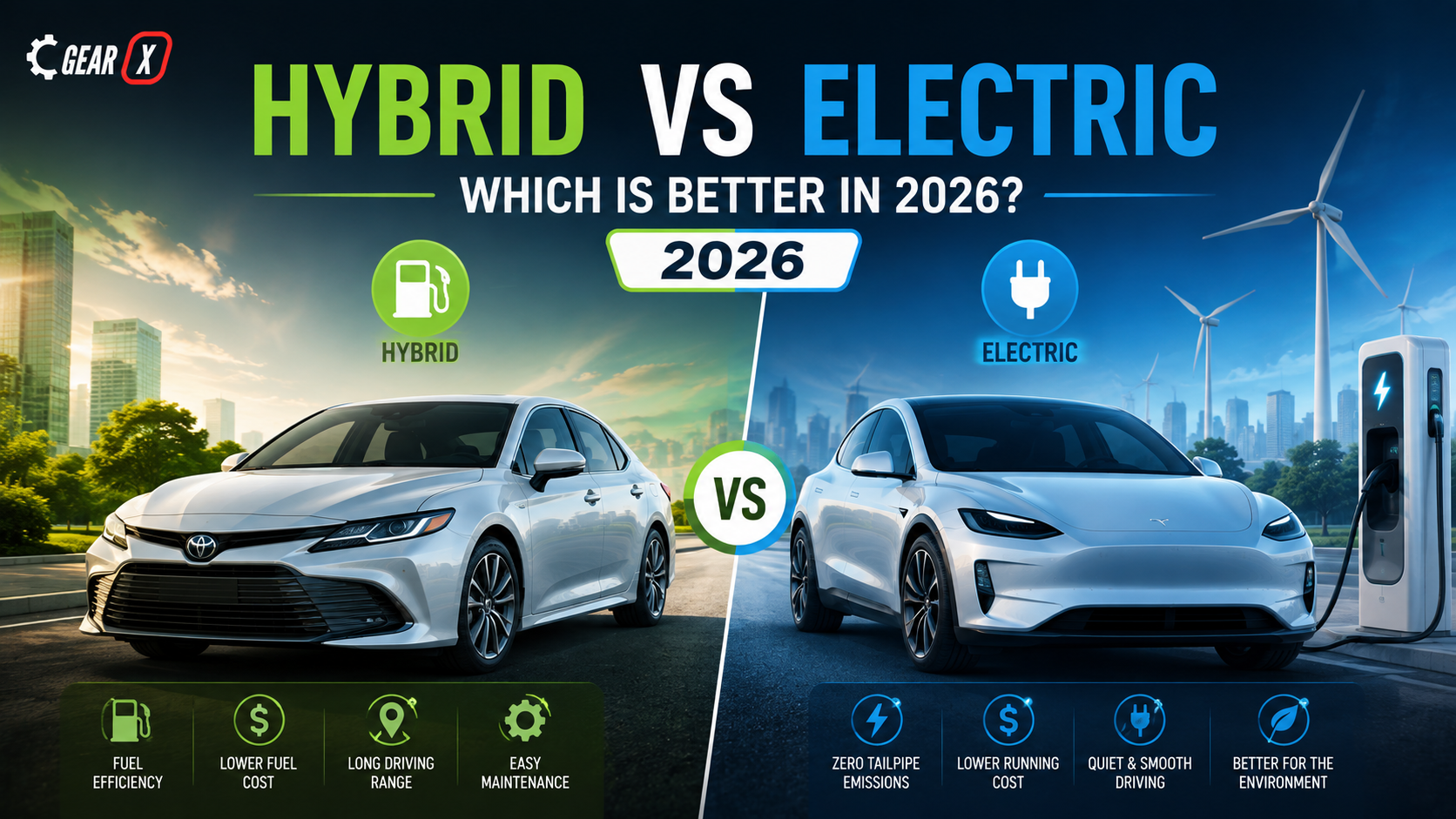
Gasoline vs EV: Which Is Better?
There is no universal winner.
| Factor | Gasoline Car | Electric Car |
|---|---|---|
| Refueling | Very fast | Can take longer |
| Fuel availability | Very widespread | Charging access varies |
| Home charging | Not required | Very useful |
| Maintenance | More mechanical servicing | Generally fewer drivetrain service items |
| Long-distance travel | Very convenient | Increasingly practical |
| Driving experience | Familiar engine feel | Quiet and instant response |
| Energy efficiency | Lower | Higher |
| Tailpipe emissions | Yes | None while driving |
| Model availability | Still broad | Expanding rapidly |
The better choice depends on the driver’s circumstances.
Who Should Still Buy a Gasoline Car?
A gasoline car can make sense in 2026 if you:
- ⛽ Frequently travel long distances
- 🛣️ Drive in areas with limited charging infrastructure
- 🏢 Live somewhere without convenient home charging
- 💰 Want a lower upfront purchase price in your local market
- 🚗 Prefer traditional driving characteristics
- 🔧 Have easy access to gasoline-car servicing
- 📅 Plan to keep the vehicle for many years and want a familiar powertrain
For these buyers, moving to an EV simply because it is newer may not be the best financial or practical decision.
Who Should Consider an EV Instead?
An EV may be a better choice if you:
- 🔌 Have reliable home charging
- 🏙️ Mostly drive in urban areas
- 🚗 Have predictable daily driving distances
- ⚡ Want lower energy costs
- 🤫 Prefer quiet driving
- 🧠 Want advanced connected and software features
- 🌱 Want to reduce tailpipe emissions
EVs are particularly attractive for drivers who can charge at home and rarely need to make very long journeys.
What About Hybrid Cars?
There is also a middle ground.
Hybrid cars combine a gasoline engine with one or more electric motors.
They can offer better fuel efficiency than conventional gasoline vehicles while avoiding some of the charging limitations associated with fully electric cars.
For drivers who are not ready for a full EV, a hybrid can be a practical compromise.
This is one reason why the automotive market is not simply moving from gasoline directly to battery-electric vehicles.
Different powertrains can serve different types of drivers.
Resale Value Should Also Be Considered
If you plan to sell your car after a few years, resale value matters.
However, predicting future resale values in 2026 is difficult because the automotive market is changing quickly.
EV prices, battery technology, government policies, charging infrastructure, fuel costs, and consumer preferences can all influence future values.
The safest approach is not to assume that gasoline cars or EVs will automatically have better resale values.
Instead, buyers should research the specific model, local market, reliability record, depreciation history, and expected ownership period.
What Does the Future Look Like for Gasoline Cars?
The future of gasoline cars will probably look different from the past.
The IEA expects the global share of ICE vehicles in new-car sales to continue shrinking as electric vehicles and hybrids become more important. Its 2026 outlook projects EV sales to reach around 23 million units globally this year. (IEA)
However, a shrinking share does not mean gasoline cars disappear immediately.
Millions of gasoline and hybrid vehicles will remain on the roads for many years.
There will also continue to be markets where gasoline vehicles remain especially important because of affordability, infrastructure, consumer preferences, or policy differences.
In other words, the transition will not happen at the same speed everywhere.
Final Verdict
Yes, gasoline cars are still worth buying in 2026—but the answer depends on your situation.
For drivers who value quick refueling, long-distance convenience, broad service availability, and traditional driving characteristics, a gasoline vehicle can still be a sensible purchase.
For drivers with home charging, predictable daily routes, and an interest in lower energy consumption, an EV may offer greater long-term advantages.
And for people who want something between the two, a hybrid can provide a practical balance.
The important thing is not to choose a powertrain simply because it is considered the “future.”
Instead, consider your driving habits, local infrastructure, purchase budget, ownership period, and running costs.
Gasoline cars may no longer dominate the automotive future, but in 2026, they are certainly not irrelevant yet.
Important Note
This article is based on publicly available automotive and energy-market information, including analysis from the International Energy Agency (IEA). GearX has not claimed personal ownership, testing, or first-hand experience with any specific vehicle discussed here.
Fuel prices, electricity costs, vehicle prices, taxes, incentives, charging infrastructure, and vehicle availability vary significantly by country and can change over time.
Readers should compare the total cost of ownership and available vehicles in their local market before making a purchase decision.