
 Imtiaj Hossain
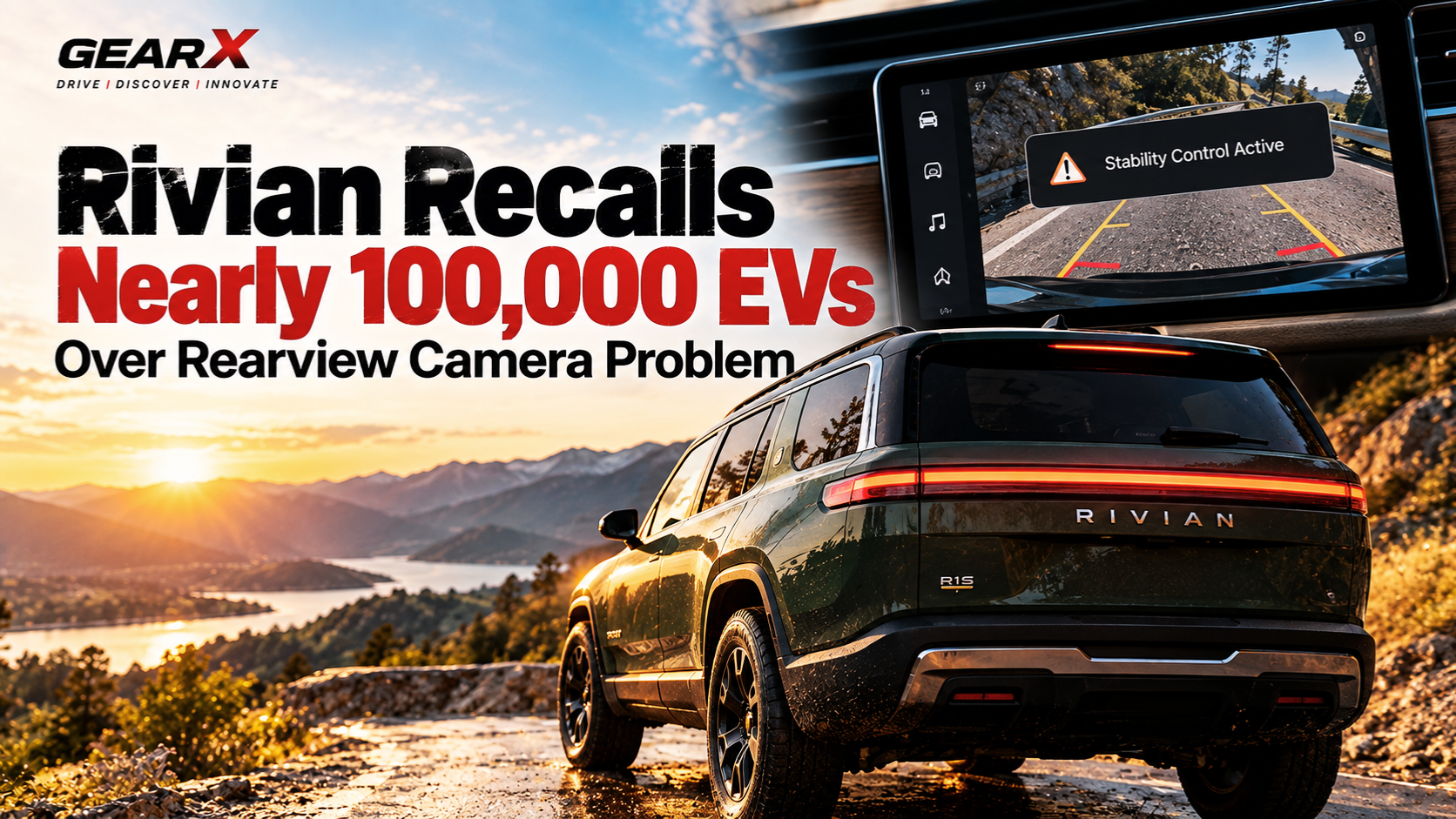
Rivian is recalling 98,828 electric vehicles in the United States because a software issue can obstruct the rearview camera image while the vehicle is in reverse. The recall affects certain R1S, R1T and the newer R2 models. (Cars.com)
The issue does not appear to involve a damaged camera or a failed display. Instead, a notification on the vehicle’s center screen can cover part of the rearview camera image under a specific set of conditions.
Which Rivian Models Are Affected?
According to the National Highway Traffic Safety Administration (NHTSA), the recall covers certain:
- 2022–2027 Rivian R1S
- 2022–2026 Rivian R1T
- 2027 Rivian R2
The recall is listed as NHTSA Campaign No. 26V597000, with Rivian’s campaign number FSAM-1866. (Cars.com)
The affected vehicles were produced during specific manufacturing periods, so not every vehicle from these model years is necessarily included.
What Is the Problem?
The problem is related to the vehicle’s software and center-display interface.
In certain circumstances, a safety notification can appear over the rearview camera image after the driver shifts into reverse. The notification is related to the vehicle’s stability-control system.
When the notification covers the camera view, the driver may temporarily lose part of the visual information behind the vehicle.
NHTSA says an obstructed rearview camera image can reduce the driver’s view behind the vehicle and increase the risk of a crash. The issue also means affected vehicles do not comply with the rear-visibility requirements of Federal Motor Vehicle Safety Standard No. 111. (Cars.com)
Rivian Has Already Released a Fix
The good news for owners is that this recall does not require a replacement camera or other hardware repair.
Rivian has released a free over-the-air (OTA) software update to correct the problem. (Investing.com)
Reuters reported that Rivian said more than 95% of affected vehicles had already received the software fix by the time of the recall filing. Vehicles produced after August 10, 2026, also received the corrected software from production. (Investing.com)
That means many owners may already have the fix installed without visiting a service center.
However, owners should still verify their individual vehicle’s software and recall status rather than assuming the update has been completed.
Does This Mean the Rear Camera Is Broken?
No.
This is an important distinction.
The recall is related to how the software displays information on the screen, rather than a physical failure of the rearview camera itself.
The camera can still be working normally, but a notification can temporarily appear over the camera image.
That is why Rivian can address the issue through a software update instead of replacing camera hardware.
What Should Rivian Owners Do?
If you own an affected R1S, R1T or R2, check the vehicle’s current software version and recall status.
You can also use the official NHTSA recall search to check your vehicle by VIN. NHTSA notes that its VIN search can show whether a vehicle has an unrepaired safety recall. (NHTSA)
Check Your Vehicle for Recalls — NHTSA
Rivian owners should also install the latest available vehicle software when prompted.
If the rearview camera image is covered by a notification, drivers should not rely only on the camera while reversing. Check the surroundings directly and use the vehicle’s mirrors and other available visibility systems as appropriate.
When Will Owners Receive Recall Letters?
Rivian’s owner notification letters are expected to be mailed beginning November 9, 2026.
NHTSA also says the affected VINs are expected to become searchable through its recall system on that date. (Cars.com)
Because the software update is already available, owners do not necessarily need to wait for the physical letter before checking their vehicle.
Why This Recall Matters
Modern EVs increasingly depend on software for functions that traditionally relied on physical components. That makes software updates useful for fixing certain problems quickly, but it also means a software interface issue can become a vehicle safety-compliance issue.
In this case, the problem is relatively specific: a notification can interfere with the rearview camera image while reversing.
The remedy is also relatively straightforward—a free software update.
Still, rear visibility is an important part of low-speed vehicle safety, so owners should verify that their individual vehicle has received the appropriate update.
Final Thoughts
Rivian is recalling 98,828 vehicles in the U.S. over a software problem that can temporarily obstruct the rearview camera image when reversing. The affected vehicles include certain R1S, R1T and 2027 R2 models. (Cars.com)
Rivian has already released a free OTA software fix, and many affected vehicles have reportedly received it. Owners should still check their vehicle’s software and VIN-based recall status to confirm whether the repair has been completed.
For the latest recall information, owners should rely on NHTSA and Rivian’s official information, rather than assuming every vehicle from an affected model year is included.
Important Note
This article is based on publicly available recall information from NHTSA, Reuters and automotive industry sources available in September 2026. Recall coverage can vary by individual vehicle and VIN, so owners should verify their specific vehicle through the official NHTSA recall database or Rivian.
Sources: NHTSA, Reuters, Cars.com. (Cars.com)